Viticulture: Essential Edition - Board Game Review (Queer Perspective)
Viticulture is a beautiful worker placement board game about running a vineyard in Tuscany. In this review, we explore the gameplay, Tuscany expansion, and inclusivity from a queer perspective.
BOARD GAME REVIEWS
3/15/2026
Viticulture: Essential Edition - Board Game Overview
Designer: Jamey Stegmaier
Publisher: Stonemaier Games
Players: 1–6
Playtime: 45–90 minutes
Mechanics: Worker placement, engine building
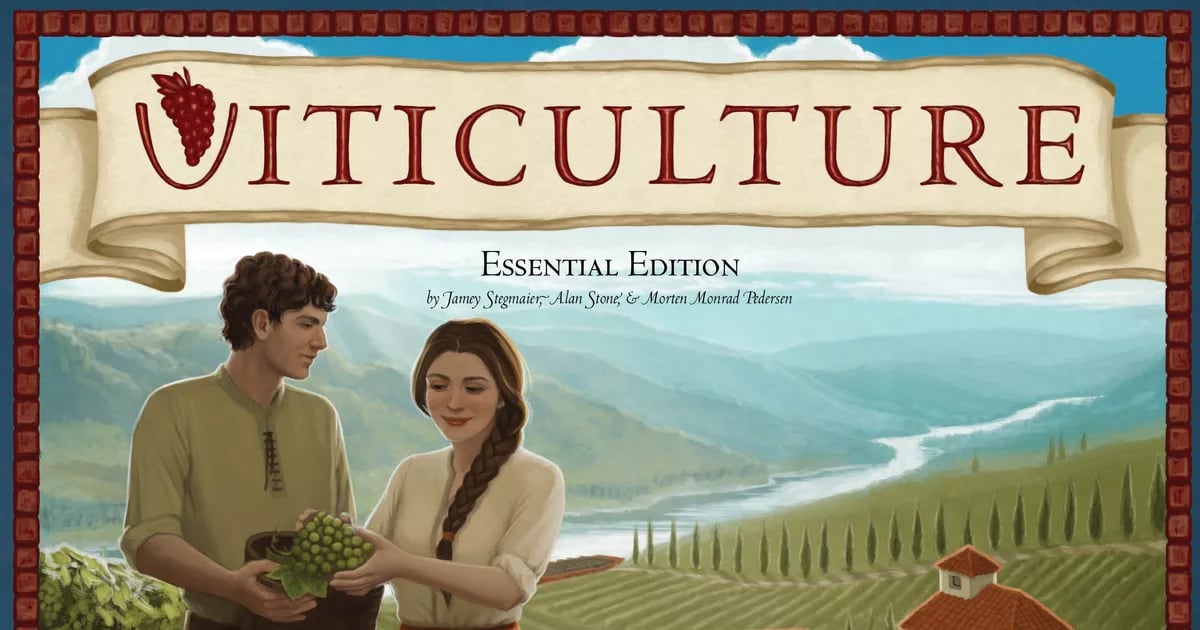
Viticulture is one of those board games that immediately sells you on its theme. Instead of battling monsters or conquering galaxies, you are running a vineyard in the Tuscan countryside, slowly building your winery from a humble family estate into a thriving wine business.
In this Viticulture: Essential Edition board game review, I want to look not only at the gameplay itself but also at something that often gets ignored in board game reviews: how games evolve to become more inclusive, and what that can mean for queer players in the tabletop hobby.
Viticulture may not be an explicitly LGBTQ-themed game, but the way its design has evolved over the years shows how even small changes can make the hobby feel a little more welcoming.
A Vineyard Dream in Tuscany
The premise of Viticulture is simple but charming. Each player inherits a small winery in Tuscany and tries to turn it into the most successful vineyard in the region.
You don’t start with much. Your estate is modest, your cellar is small, and you only have a handful of workers to manage the entire operation. From there, the game slowly unfolds as you plant vines, harvest grapes, produce wine, and fulfill wine orders.
What makes Viticulture so appealing is how satisfying that gradual growth feels. Early turns can feel a little scrappy as you try to figure out how to make the most of your limited workers, but over time your vineyard becomes a carefully tuned machine. Watching that engine develop over the course of the game is easily one of the most rewarding parts of the experience.
And honestly, the theme does a lot of heavy lifting here. Running a vineyard is such a cozy and evocative idea that it immediately pulls you into the world of the game.
Viticulture Gameplay: Worker Placement Done Right
Mechanically, Viticulture is a worker placement board game, which means players assign workers to different action spaces on the board in order to perform tasks.
Each year in the game is divided into seasons, and that seasonal structure adds a really satisfying rhythm to the gameplay.
During the summer, you focus on developing your vineyard. This is when you plant vines, build structures, and prepare your winery for future production. Winter is when things really start to pay off. That’s when grapes are harvested, wines are produced, and orders are fulfilled.
Because action spaces are limited, the order in which players place workers becomes incredibly important. Getting to an action space first can give you a significant advantage, and sometimes a single well-timed placement can completely change your strategy for the round.
Visitor cards add another layer of unpredictability. These cards represent guests who visit your vineyard and offer special abilities or bonuses. Some of them can be incredibly powerful if used at the right moment, and they often push players to adapt their plans on the fly.
The result is a game that feels strategic but never overwhelming. There’s always something interesting to think about, even when it isn’t your turn.
The Tuscany Expansion: The Version Many Players Prefer
While the base game of Viticulture is already excellent, many players eventually end up adding Viticulture: Tuscany Essential Edition to their collection.
The Tuscany expansion doesn’t radically change the game, but it deepens it in ways that feel very natural. The biggest addition is a new board that spreads actions across all four seasons instead of just summer and winter. That small change alone opens up the strategy quite a bit.
The expansion also introduces asymmetric starting resources, additional visitor cards, and special worker abilities. These additions give players more ways to shape their strategy and make each playthrough feel a little different.
For a lot of fans, Viticulture with the Tuscany expansion becomes the “definitive” version of the game.
Inclusivity in Viticulture: A Small Change That Matters 🌈
One aspect of Viticulture that doesn’t get talked about very often in traditional board game reviews is how the game has evolved in terms of inclusivity.
Earlier versions of the game used “Mama” and “Papa” cards to determine starting resources. These cards represented the family members who had helped you start your vineyard.
In later printings and expansions, including Viticulture World, this system was updated. The game now uses Red and Blue starting cards instead of gendered terminology.
On paper, that might seem like a tiny change. But in practice, it’s a thoughtful design decision that acknowledges the diversity of the board gaming community.
As a queer player, I genuinely appreciate when publishers take steps like this. They’re not huge sweeping changes, but they signal an awareness that the hobby includes people from many different backgrounds and identities.
Board gaming has historically been a space that wasn’t always very inclusive. Seeing designers and publishers make even small adjustments to improve that is encouraging.
Production Quality and Accessibility
Another thing Viticulture does extremely well is production quality.
The artwork is warm and inviting, perfectly capturing the romantic image of a Tuscan vineyard. The wooden worker meeples feel sturdy and satisfying to handle, and the overall component quality gives the game a premium feel.
The rulebook is also surprisingly approachable. Worker placement games can sometimes feel intimidating for new players, but Viticulture does a great job of easing people into the system.
Because the theme is so intuitive, many of the mechanics make immediate sense once you start playing.
Final Verdict: Is Viticulture Worth Playing?
Viticulture has remained popular for a reason. It manages to combine strategic gameplay with a theme that feels relaxing and immersive rather than stressful.
Between the satisfying worker placement system, the gradual growth of your vineyard, and the beautiful production quality, it’s easy to see why so many players consider it a modern classic.
Adding the Tuscany expansion elevates the experience even further, giving players more strategic options and making the game feel even more dynamic.
From a queer perspective, Viticulture: Essential Edition also stands out as a good example of how publishers can make thoughtful improvements to their games over time. The inclusivity changes may be small, but they reflect a broader effort to make the tabletop hobby more welcoming.
For me, Viticulture remains one of the most enjoyable worker placement games available today.
Final Scores
Accessibility and rulebook: 8/10
Theme: 8/10
Inclusivity: 8/10
Component quality: 9/10
8,5 out of 10
🍷 Final rating: Viticulture is an elegant and deeply satisfying board game that almost any strategy game fan will enjoy.
Why We Review Board Games From a Queer Perspective
At ChaoticSapphics, we review board games through a queer and inclusive lens.
Tabletop gaming has grown enormously over the past decade, but representation and inclusivity are still evolving within the hobby. Looking at games from a queer perspective helps highlight small design choices that make gaming spaces feel more welcoming.
Sometimes that means celebrating explicitly queer games, and sometimes it simply means acknowledging thoughtful design decisions that move the hobby in a more inclusive direction.
Our goal is to highlight inclusive board games and queer-friendly tabletop experiences while still focusing on what makes games genuinely fun to play.
FAQ: Viticulture Board Game
Is Viticulture beginner friendly?
Viticulture is fairly approachable for a strategy game. While new players might need a round or two to fully understand the worker placement system, the intuitive vineyard theme makes the mechanics easier to grasp.
Is the Tuscany expansion necessary?
The base game works well on its own, but many players consider Tuscany Essential Edition the best way to experience Viticulture because it adds more strategic depth.
How long does Viticulture take to play?
Most games last between 45 and 90 minutes depending on player count.
Is Viticulture an inclusive board game?
Later versions of Viticulture replaced gendered “Mama and Papa” cards with neutral starting cards, reflecting a more inclusive approach to game design.
Want more board game recommendations? Be sure to check our list of cozy board games for two players.
Questions, thoughts, or book suggestions? Reach out!
© 2026 ChaoticSapphics. All content unless otherwise stated is owned by Chaotic Sapphics. All rights reserved.