
Anxious-Avoidant Attachment in a Lesbian Relationship: Why One Reaches and the Other Pulls Away
We’re two women in a sapphic relationship navigating anxious and avoidant attachment, learning how to feel safe, stay connected, and slowly build a more secure kind of love together.
ATTACHMENT CHAOS
1/26/2026
We didn’t know the words anxious and avoidant when we fell in love. We just knew that something felt off in moments that were supposed to feel safe. That sometimes closeness felt like relief to one of us and pressure to the other. That love could feel both grounding and destabilizing at the same time.
We’re still together. Married even. That matters. And it changes how this story is told.
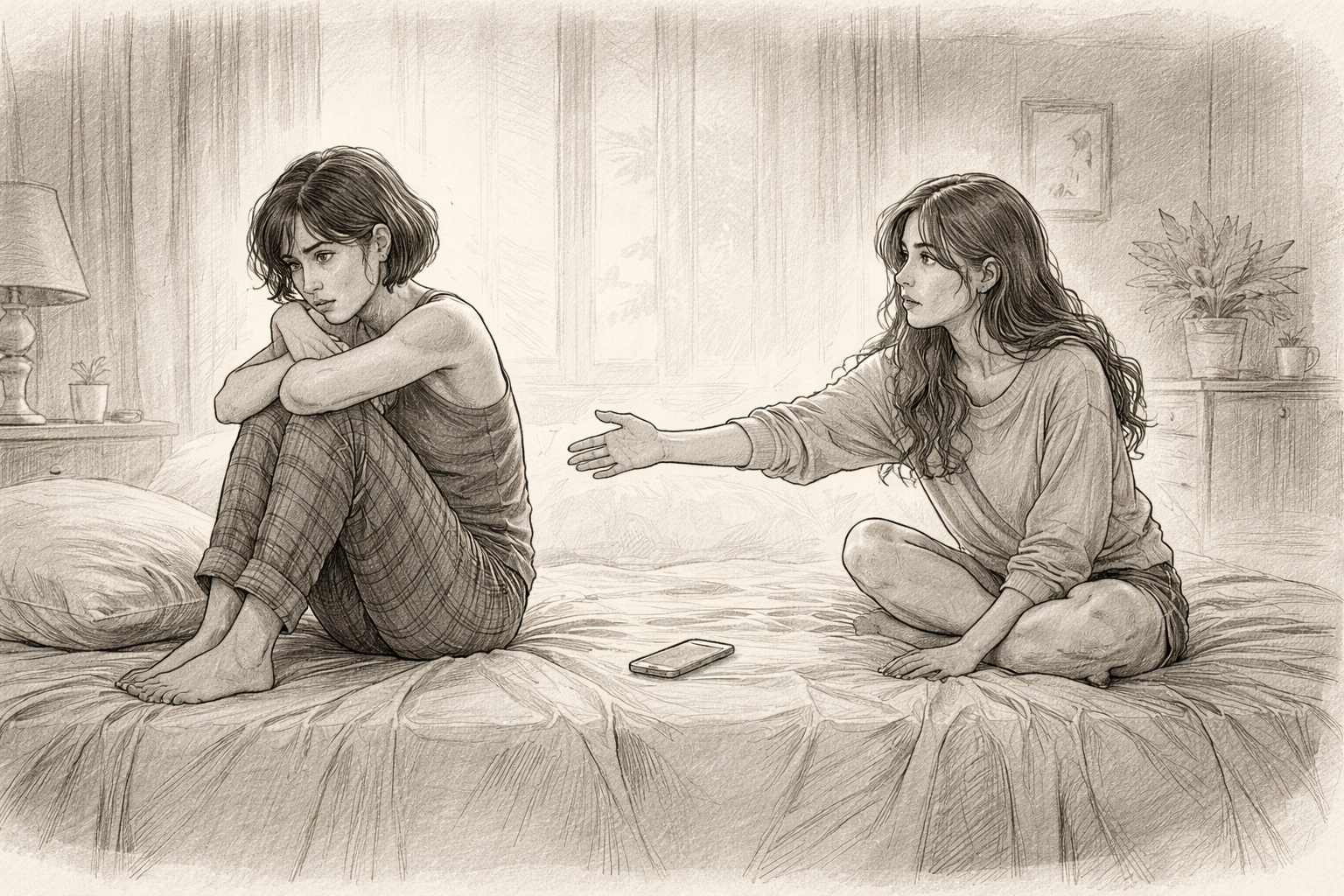
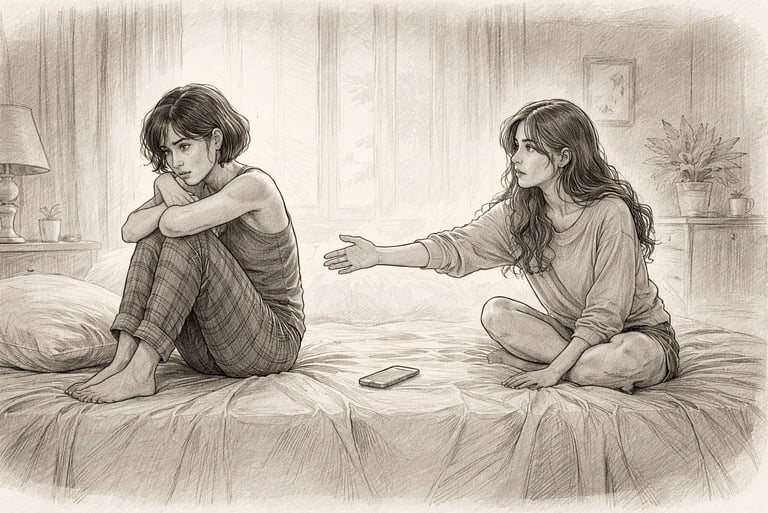
One of us leans anxious. Love, for her, is contact. Reassurance. Being emotionally in sync. When something shifts, she feels it immediately, in her body, before it ever becomes a thought. Silence feels loud. Distance feels dangerous. Not because she doesn’t trust her partner, but because her nervous system learned early on that connection can disappear without warning.
The other leans avoidant. Love, for her, is safety through space. Autonomy. Knowing she can step back and still be held in the relationship. Intensity can feel overwhelming, even when it’s wanted. Especially when it’s wanted. Pulling away isn’t rejection, it’s regulation. It’s how she learned to stay intact.
For a long time, we were stuck in the same loop. She reached because she was scared, and I pulled back because I was flooded. The more she reached, the more I withdrew. The more I withdrew, the more alone she felt. We were both reacting, both hurting, both convinced the other didn’t understand what was really happening beneath the surface.
If you’re wondering what this actually looks like in everyday moments - during stress, arguments, or even physical closeness - we wrote a separate piece breaking down how anxious and avoidant partners experience the same situation completely differently.
Being two women added another layer. There’s this unspoken expectation that sapphic relationships should be emotionally fluent, deeply communicative, soft and intuitive. So when we missed each other, it felt like failure. Like we were doing womanhood wrong. Like love between women was supposed to be easier than this.
It wasn’t.
What changed things wasn’t fixing each other. It was learning to speak from inside our attachment instead of defending it. She learned to say, “I’m not trying to control you. I’m scared and I need reassurance.” I learned to say, “I’m not leaving. I’m overwhelmed and I need a moment to come back regulated.”
That language didn’t fix us overnight, but it changed the direction we were moving.
Healing hasn’t been linear. Some days, old patterns still show up. She still sometimes reaches before I’m ready. I still sometimes go quiet when things get intense. But now there’s more curiosity than blame. More pauses. More repair.
We’re learning how to co-regulate instead of triggering each other. How to offer reassurance without losing ourselves. How to take space without disappearing. Secure attachment isn’t a destination we woke up in one day, it’s something we practice. Over and over. Sometimes clumsily. Sometimes beautifully.
This relationship still exists because we chose to understand instead of pathologize. Because neither anxious nor avoidant is the problem. The problem was thinking one of us had to change before the relationship could feel safe.
We’re not fully secure. Not yet. But we’re moving there together. And for two women who once felt like they were speaking different emotional languages, that feels like its own kind of intimacy.
Questions, thoughts, or book suggestions? Reach out!
© 2026 ChaoticSapphics. All content unless otherwise stated is owned by Chaotic Sapphics. All rights reserved.